
Where Black Rice Comes From
Karuppu Kavuni, also called Black Kavuni, is a treasure from Tamil Nadu. Farmers in South India have been growing this special rice for thousands of years, mostly in areas with rich, fertile soil.
This isn’t just any ordinary rice crop. It tells the story of Tamil farmers and their smart farming methods passed down through generations. Growing and protecting this ancient rice shows how hardworking and creative the people of Tamil Nadu have been throughout history.
Even today, this rice remains an important part of South India’s farming traditions and culture.
The history of black rice is a special type of rice that looks dark black or purple. In English, people call it “Black Rice.” This ancient grain comes from Tamil Nadu and has been grown there for hundreds of years.
Long ago, this rice was so precious that only kings and rich people could eat it. Some cultures even called it “Forbidden Rice” because common people weren’t allowed to have it. Today, we know why it was considered so valuable—it’s packed with amazing health benefits that regular white rice doesn’t have.
This rare rice variety isn’t just beautiful to look at. It’s also one of the healthiest grains you can eat, which is why people still treasure it today
Where is Karuppu Kavuni Black Rice Grown in Tamil Nadu?
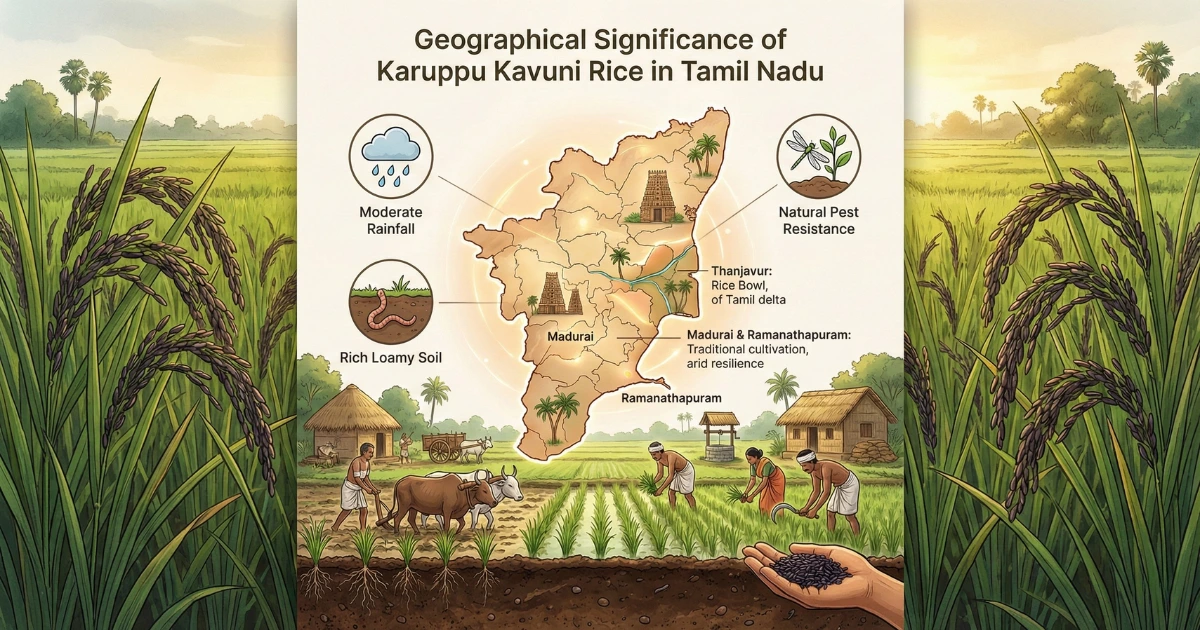
Karuppu Kavuni grows well in places that get regular rainfall and have rich, healthy soil. Farmers in Tamil Nadu grow most of this special rice, especially in areas where they still use traditional farming methods.
The main growing areas include:
Thanjavur – Known as the “Rice Bowl of Tamil Nadu,” this region is famous for producing high-quality Karuppu Kavuni.
Madurai and Ramanathapuram – These districts also grow this black rice successfully.
Farmers love growing this rice because it can handle the local weather conditions and doesn’t get attacked by pests as easily as other rice varieties. This natural strength makes it easier to grow without using too many chemicals.
The Royal History of Black Rice
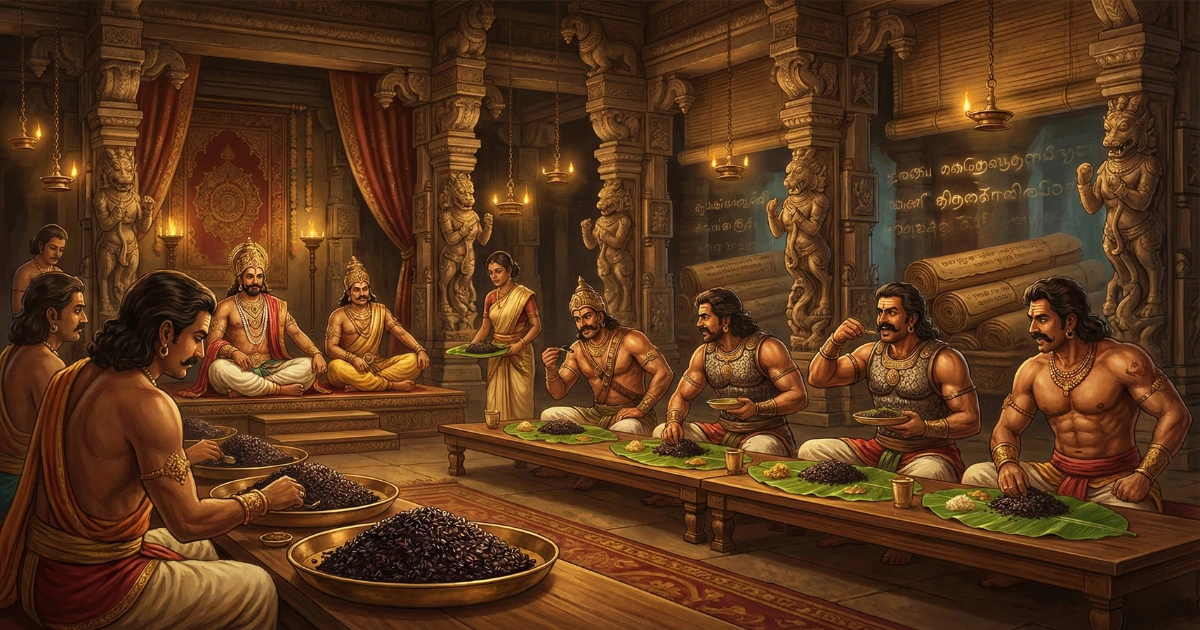
Long ago in Tamil Nadu, Karuppu Kavuni was considered a luxury food that only special people could eat. Kings served this black rice at grand feasts and important celebrations.
Who Ate Black Rice in Ancient Times?
Kings and warriors ate this rice regularly because they believed it gave them energy and made them stronger. It wasn’t available to common people—only the royal family and their soldiers could enjoy it.
Black Rice in Ancient Tamil Writings
Old Tamil poems from the Sangam period (written over 2,000 years ago) mention special rice varieties. Historians believe these poems were talking about Kavuni rice because of its delicious taste and health-giving qualities.
This shows that people recognized the value of black rice thousands of years before modern science proved its health benefits.
Cultural and Traditional Significance of Black Rice History
Karuppu Kavuni is more than just food—it’s an important part of Tamil culture and traditions.
Tamil Heritage: Black Rice in Temple Celebrations
During festivals and temple ceremonies, priests use this black rice to make special offerings to God. People believe it represents good fortune and thankfulness. Even today, many temples in Tamil Nadu continue this ancient practice.
Black Rice at Weddings and Special Occasions
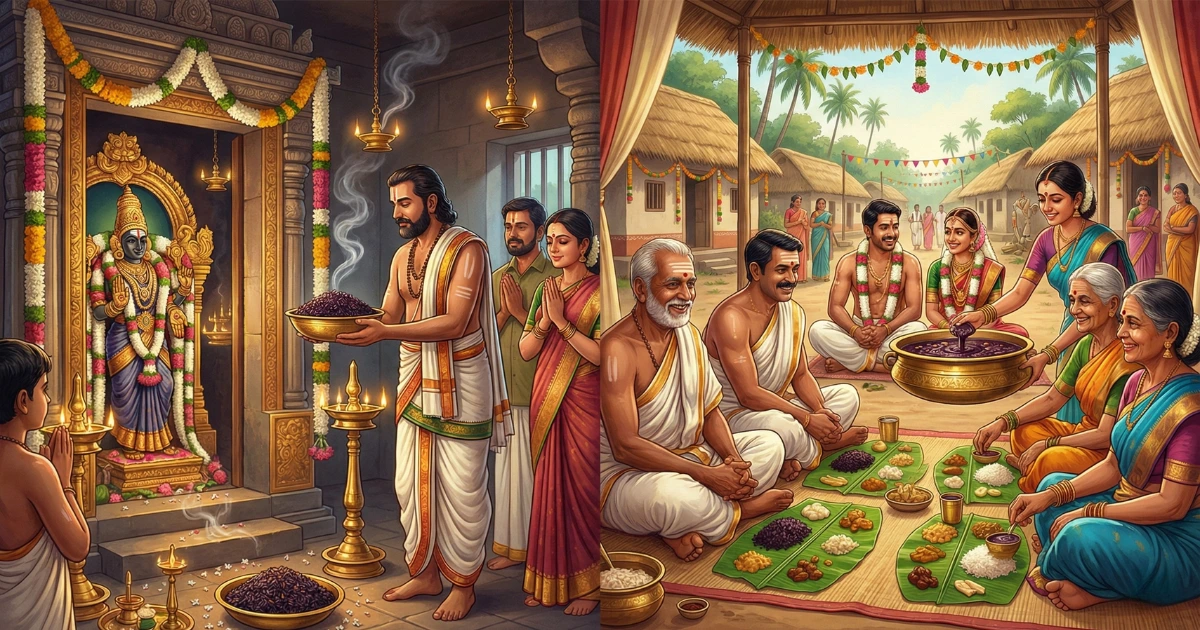
In Tamil villages, families serve black rice dishes at weddings and important life events. One popular dish is Karuppu Kavuni Payasam, a sweet pudding made from black rice. When families serve this at weddings, it symbolizes:
- Abundance and prosperity
- Happiness and celebration
- Blessings for the couple’s future
This tradition shows how deeply black rice is connected to Tamil culture. It’s not just healthy food—it carries the joy and hopes of entire families during their most importantmoments.
What Does Karuppu Kavuni Black Rice Look Like?
Karuppu Kavuni is a special rice that looks completely different from regular white rice. Its dark color and unique features show that it’s packed with powerful nutrients.
Color and Appearance
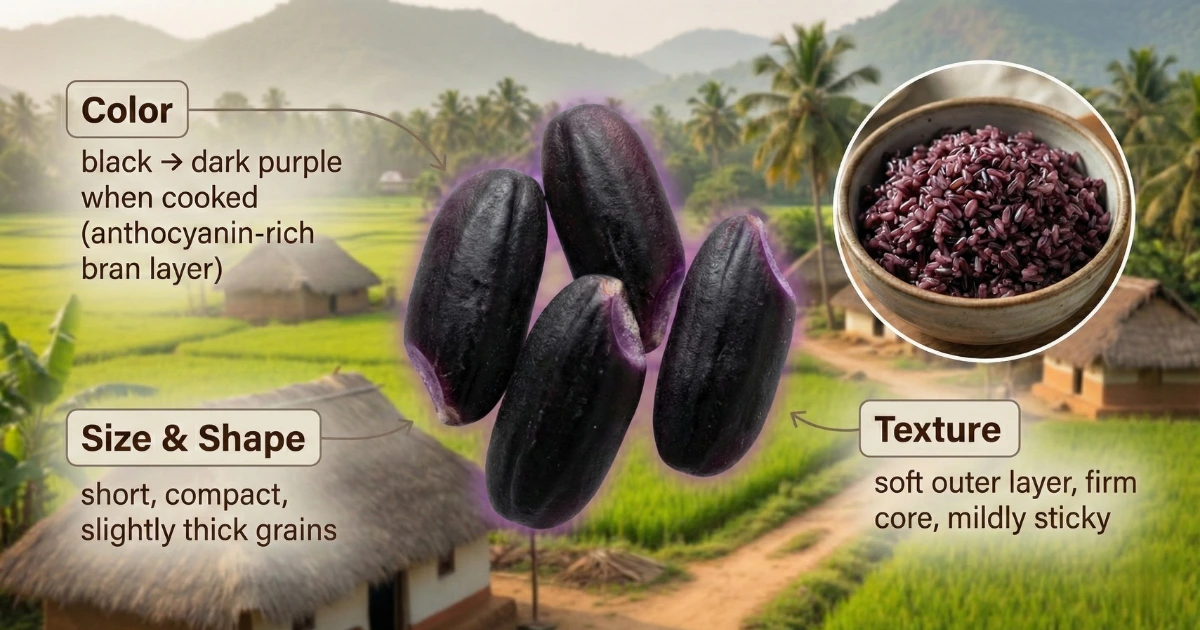
Deep Black Color: The most striking thing about this rice is its jet-black color. When you cook it, it turns dark purple. This beautiful color comes from anthocyanins—the same healthy antioxidants found in blueberries and blackberries.
Grain Shape: Unlike long, thin basmati rice, Karuppu Kavuni grains are short and thick. They look compact and dense, which gives the cooked rice a pleasant, chewy texture.
Texture: Raw grains feel smooth and firm. After cooking, the rice becomes slightly sticky with a soft outside but stays firm in the center—perfect for various dishes.
Smell and Taste
Aroma: This black rice has a mild, earthy smell with a hint of nuts. It doesn’t have a strong fragrance like jasmine rice, but its gentle aroma works well in both sweet and savory recipes.
Flavor: The taste is rich and nutty with a touch of natural sweetness. This makes it perfect for traditional desserts like payasam or modern dishes like salads and rice bowls.
How to Cook Black Rice
Takes Longer to Cook: Because Karuppu Kavuni keeps its natural outer layers (it’s not polished), it needs more time to cook than white rice.
Soaking is Important: Soak the rice in water for 6-8 hours before cooking. This makes it cook faster and taste better.
Uses More Water: This rice absorbs a lot of water. Use 3-4 cups of water for every 1 cup of rice to get soft, well-cooked grains.
What Makes It Special
Natural Purple-Black Color: The dark pigment isn’t just beautiful—it’s a sign of anthocyanins, powerful antioxidants that protect your health.
Whole Grain Goodness: Unlike polished white rice, black rice keeps its bran and germ layers intact. This means it has much more fiber, vitamins, and minerals.
Steady Energy: The rice releases energy slowly, keeping you full longer and preventing sudden hunger.
Naturally Pest-Resistant: Farmers can grow this rice with fewer chemicals because it naturally fights off pests and diseases.
Good for Farmers and the Environment
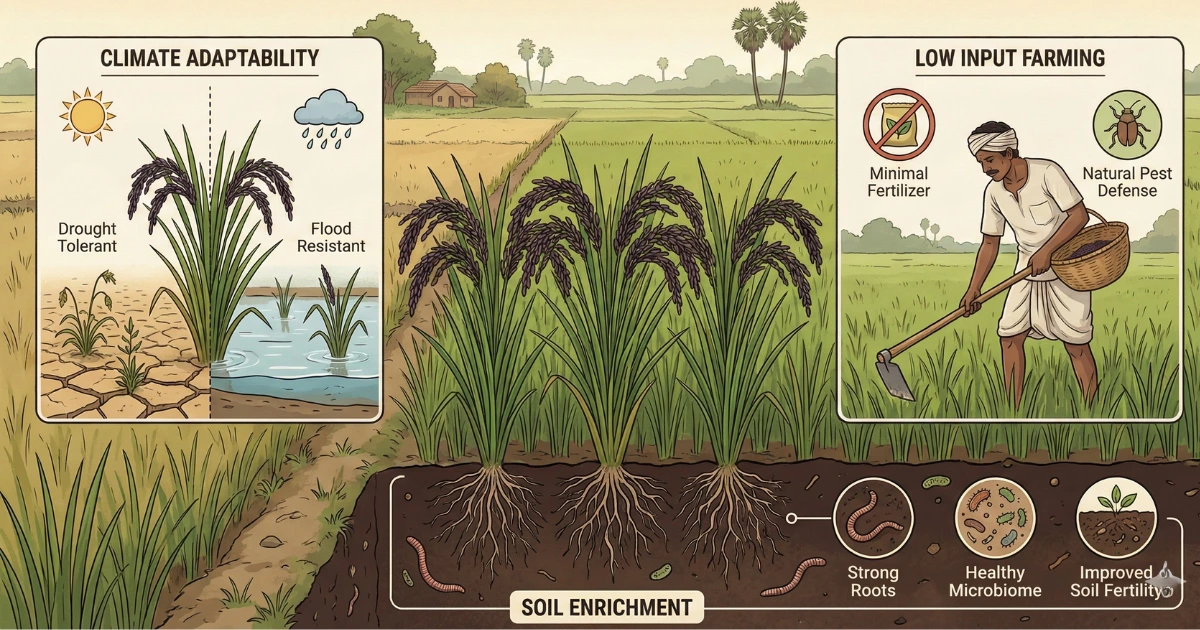
Handles Different Weather: Karuppu Kavuni can grow in both dry conditions and wet, waterlogged soil. This makes it a safe choice for farmers, especially when weather is unpredictable.
Needs Fewer Chemicals: This rice grows well without much fertilizer or pesticides. This saves money for farmers and is better for the environment.
Improves Soil Quality: Farmers notice that after growing black rice, their soil becomes healthier. The rice roots work well with helpful microbes in the soil, making it more fertile for future crops.
Karuppu Kavuni: Ancient Grain for Modern Health
Karuppu Kavuni is much more than just old-fashioned rice. It represents the wisdom of ancient Tamil farmers who understood health and nature thousands of years ago.
Why This Black Rice Matters Today
With its deep black color and incredible nutritional value, Karuppu Kavuni has earned the title of “superfood” in today’s health-conscious world.
From Ancient Fields to Modern Kitchens: This rice has traveled from Tamil Nadu’s traditional farms to become a popular health food. It shows how ancient farming practices can solve modern health problems.
Packed with Health Benefits: Black rice is loaded with antioxidants, fiber, vitamins, and minerals. These nutrients help:
- Control diabetes and blood sugar
- Boost your immune system
- Fight diseases and promote longer life
Backed by Traditional Medicine: Both Ayurveda and Siddha—ancient Indian healing systems—have recognized black rice’s medicinal powers for centuries. Modern science now confirms what these traditional doctors knew all along.
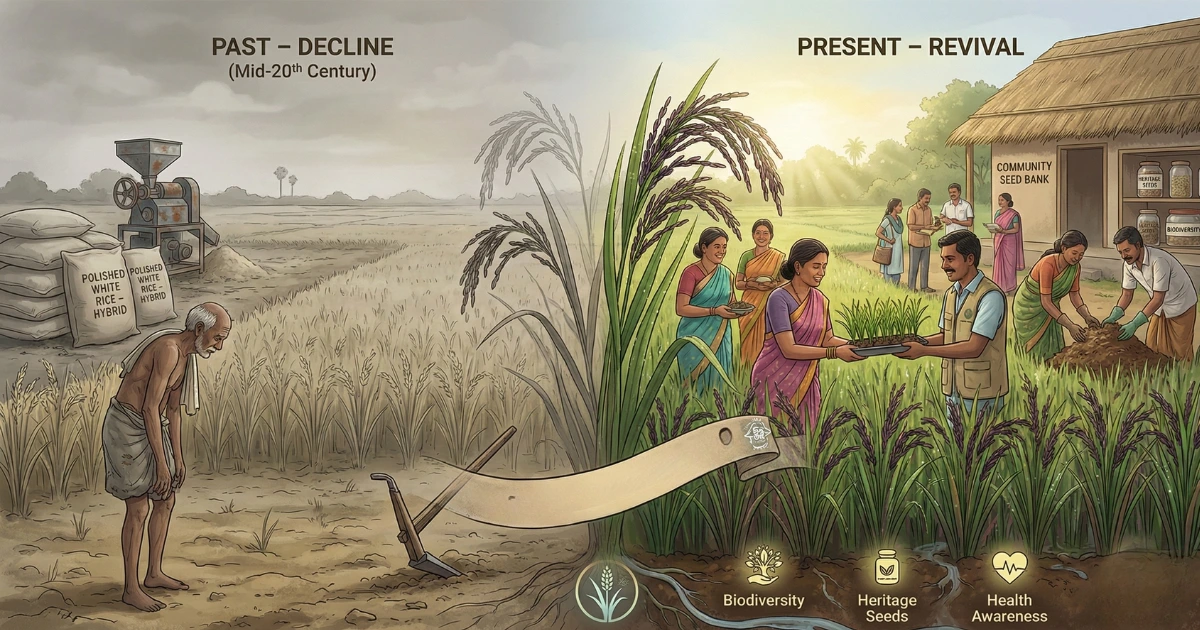
Karuppu Kavuni proves that the best solutions for today’s health challenges often come from respecting and reviving our ancestors’ knowledge.
FAQ
Which brands provide Karuppu Kavuni rice with certification for purity and quality?
V Naturals offers certified Karuppu Kavuni black rice with guaranteed purity and quality, including:
- Organic certification (pesticide-free)
- Laboratory-tested authenticity
- Directly sourced from Tamil Nadu farmers
- 100% natural, unpolished black rice
Always choose brands with proper certifications, transparent sourcing, and quality testing reports.
What are the best ways to verify the quality of Karuppu Kavuni rice before purchase?
Simple Quality Tests:
Look:
- Deep black to dark purple color (not artificially dyed)
- Short, thick, uniform grains
Water Test:
- Soak grains for 30 minutes
- Real black rice releases purple color slowly
- Fake rice turns water dark immediately
Check:
- Organic certification marks
- Source location (Tamil Nadu)
- Customer reviews
Smell:
- Mild, earthy, nutty aroma
- No chemical odor
V Naturals Guarantee: Our Karuppu Kavuni undergoes strict quality checks with complete farm-to-package traceability for 100% authentic black rice.